
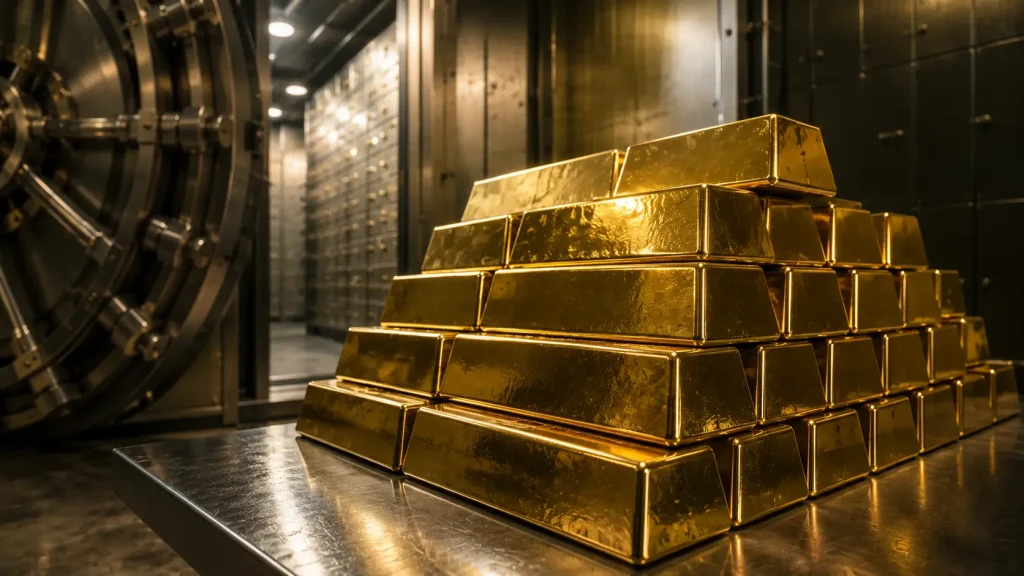
Why Gold Continues to Be a Safe-Haven Investment in Uncertain Markets
Gold has maintained its position as one of the world’s most valuable assets for thousands of years. From ancient civilizations to modern financial markets, investors have consistently turned to gold during periods of economic uncertainty, inflation, and geopolitical instability. Unlike paper currencies or many financial assets, gold possesses intrinsic value and has historically demonstrated resilience during times of market stress.
Today, gold continues to play an important role in diversified investment portfolios. Whether economic conditions are driven by inflation, interest rate changes, geopolitical tensions, or financial market volatility, the precious metal remains a preferred option for investors seeking stability. At the same time, publicly traded gold mining companies often attract increased attention as higher gold prices can improve profitability and encourage new exploration and production activities.
As global economies continue to evolve, understanding the factors that influence gold prices has become increasingly important for investors interested in both precious metals and mining companies.
Why Gold Is Considered a Safe-Haven Asset
A safe-haven asset is an investment that is expected to retain or increase its value during periods of financial uncertainty. Gold has earned this reputation because it is not directly tied to the performance of any single government, currency, or corporation. Unlike stocks or bonds, gold has intrinsic value that has been recognized across cultures and economies for centuries.
During periods of market instability, investors often seek assets that can preserve wealth. Gold has historically performed well during economic recessions, banking crises, and periods of elevated inflation. Its limited supply and global demand contribute to its ability to maintain long-term value.
Institutional investors, central banks, and individual investors frequently increase their gold holdings when uncertainty rises, reinforcing its role as a defensive investment.
Economic Uncertainty Drives Investor Demand
Economic uncertainty is one of the strongest catalysts for higher gold prices. Concerns surrounding slowing economic growth, rising debt levels, geopolitical conflicts, or financial market volatility often encourage investors to reduce exposure to riskier assets and increase allocations to precious metals.
Events such as global recessions, banking sector instability, and international conflicts have historically resulted in increased demand for physical gold, gold-backed exchange-traded funds (ETFs), and shares of gold mining companies.
As uncertainty grows, investor confidence in traditional financial markets may decline, making gold an attractive alternative for capital preservation.
The Relationship Between Inflation and Gold
Inflation reduces the purchasing power of currencies over time. When prices for goods and services rise, investors frequently seek assets capable of preserving value.
Gold has long been viewed as a hedge against inflation because its supply grows relatively slowly compared to paper currencies. While no asset is immune to short-term price fluctuations, gold has historically maintained purchasing power during periods of persistent inflation.
Central bank monetary policies, interest rate decisions, and currency movements often influence inflation expectations, making them important factors affecting gold prices.
Gold Mining Companies Benefit from Higher Prices
While investors often focus on physical gold, publicly traded mining companies provide another way to gain exposure to the precious metals sector.
When gold prices increase, mining companies may benefit through:
- Higher potential revenue
- Improved operating margins
- Increased exploration investment
- Expansion of existing operations
- Greater investor interest
Companies that successfully control operating costs while increasing production are often better positioned to capitalize on favorable market conditions. Investors frequently evaluate mining companies based on production volumes, mineral reserves, exploration success, financial performance, and long-term growth strategies.
Risks Investors Should Consider
Although gold is widely recognized as a defensive asset, it is not without risk. Prices may fluctuate based on changes in monetary policy, investor sentiment, or broader financial market conditions.
Investors should remember that:
- Gold prices can be volatile in the short term.
- Rising interest rates may reduce demand for non-yielding assets.
- Mining companies face operational and regulatory risks.
- Commodity prices are influenced by global economic conditions.
Maintaining a diversified portfolio and conducting independent research remain important principles for managing investment risk.