
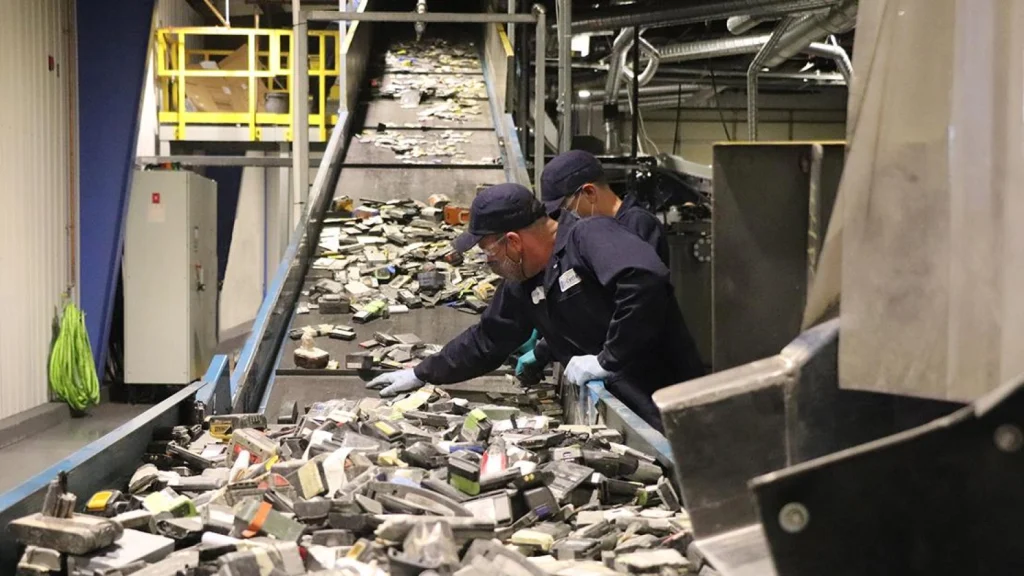
The Role of Battery Recycling in Securing Critical Mineral Supply Chains
As the global energy transition accelerates, demand for critical minerals continues to outpace supply. While mining remains essential for meeting future resource needs, battery recycling is emerging as a complementary solution to recover valuable materials and strengthen global supply chains. From lithium and nickel to cobalt and graphite, recycled battery materials are becoming an increasingly important part of the clean energy economy.
Governments, automakers, and battery manufacturers are investing heavily in recycling technologies to reduce waste, improve resource efficiency, and decrease reliance on newly mined materials. At the same time, mining companies continue exploring new deposits to ensure sufficient supplies of critical minerals for decades to come.
Why Battery Recycling Matters
Electric vehicles (EVs), renewable energy storage systems, and consumer electronics all rely on lithium-ion batteries. As these batteries reach the end of their useful lives, they contain valuable metals that can be recovered and reused in new battery production.
Battery recycling offers several important benefits:
- Reduces dependence on imported critical minerals
- Supports a more sustainable supply chain
- Lowers environmental impact compared to primary extraction
- Helps stabilize long-term mineral availability
- Recovers valuable metals from used batteries
Although recycling alone cannot satisfy future demand, it plays an increasingly important role in supporting the global energy transition.
Critical Minerals Recovered Through Recycling
Modern recycling facilities can recover a wide range of strategic materials used in battery manufacturing, including:
- Lithium
- Nickel
- Cobalt
- Copper
- Graphite
- Manganese
These recovered materials can be processed and reintroduced into battery manufacturing, reducing the need for newly extracted resources while supporting domestic supply chains.
Mining and Recycling Work Together
Battery recycling is often viewed as an alternative to mining, but the two industries are highly complementary. Global demand for electric vehicles, renewable energy systems, and energy storage continues to grow faster than recycled material can be produced.
New mines remain essential because most batteries currently in use will not reach recycling facilities for many years. Until then, exploration companies and mining projects will continue supplying the raw materials needed to support expanding clean energy industries.
Together, responsible mining and advanced recycling create a more resilient and sustainable critical mineral supply chain.
Government Policies Are Driving Investment
Countries around the world are introducing policies that encourage battery recycling and domestic critical mineral production. Financial incentives, recycling targets, and strategic mineral initiatives aim to reduce supply chain risks while supporting local industries.
North America, Europe, and Asia continue investing in recycling infrastructure alongside new mining projects to improve long-term resource security.
Opportunities for Mining Investors
The growth of battery recycling does not reduce the importance of mineral exploration. Instead, it highlights the increasing value of critical minerals and the need for diversified sources of supply.
Junior mining companies exploring lithium, nickel, copper, graphite, and rare earth projects remain well positioned to benefit from strong long-term demand. Investors should also monitor companies developing innovative recycling technologies, processing facilities, and integrated battery supply chains.
As governments and manufacturers continue investing in electrification, both mining and recycling are expected to play vital roles in supporting the future energy economy.
Looking Ahead
The global transition to cleaner energy requires a balanced approach that combines responsible mining, technological innovation, and efficient recycling systems. Recovering valuable battery materials will help reduce waste and strengthen supply chains, while new mineral discoveries remain essential to meet growing demand.
As the clean energy economy continues to expand, battery recycling will become an increasingly important component of the critical minerals market. Investors who understand the relationship between mining, recycling, and resource security will be better positioned to identify emerging opportunities across the energy transition sector.
Follow Junior Mining Trends for the latest news on battery recycling, critical minerals, lithium exploration, copper mining, and the companies shaping the future of clean energy.